Coffee can be brewed using several different techniques. If
kept hot, coffee flavor will deteriorate quickly, and reheating can destroy
some of the flavor. Brewed coffee kept at room temperature will also
deteriorate, but if kept in an oxygen-free environment it can last almost
indefinitely. Coffee can be brewed 7 different ways, according to the grind:
Turkish,
Percolator,
Drip Brew,
Plunger/French Press,
Vacuum,
Cold Water, and
Espresso.
Turkish
Grind: Turkish
 |
| Handmade copper Ibrik |
Turkish brewing dates back to over
four and half centuries ago, predating
all other methods of preparing coffee. This is the only brewing method where
the coffee is in contact with the water during the entire process. The Turkish
grind (a pulverized coffee with a texture similar to that of talcum powder),
water, and sugar – if desired—are placed into an Ibrik. Bring this mixture to a
boil 3 times while removing the Ibrik from the fire quickly when the foam
begins to rise. After the grounds have settled, this coffee is poured into
small cups, holding back the foam with a spoon. After all cups are poured,
gently spoon the foam over the coffee. The resulting brew is thick and muddy.
Percolator
Grind: Coarse
 |
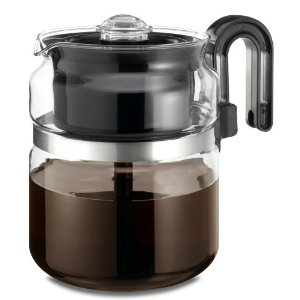
| Stove Percolator |
Percolators use the pressure of steam
to force water through the coffee grinds located in a basket at the top of the pot.
Water brought to boiling temperature “percolates” through the coffee, then drip back
into the water below, which is forced back through the percolating cycle repeatedly,
resulting in a coffee that is sometimes bitter. Percolators require monitoring. Electric percolators immediately begin a warming cycle after they have finished perking, and this warming cycle can make the coffee more bitter. Stovetop percolators need to be removed from the heat immediately after the perking is finished.
Drip Brew
Grinds:
Cone/Wedge Filter : Medium
Basket Filter: Medium
French Double Drip: Coarse
 |
| White Porcelain cone drip brewer |
 |
| Double Drip Brewer |
Drip brewing is probably the simplest method of brewing coffee and the most popular. Water heated to 195-205 degrees Fahrenheit is poured slowly over the coffee grounds to create a clear smooth cup of coffee. The filter for this coffee maker can be made from paper, cloth, metal, or plastic and be cone-or basket shaped. Drip makers can be manual or electric.
Plunger/French Press
GRIND: MEDIUM COARSE
The French Press uses an infusion process to brew coffee. Add 2 tablespoons for every 6 ounces of hot water to the apparatus. After 3 minutes, stir slightly. When using fresh coffee, the grounds will drop, creating a big head of foam. Add more hot water, wait 3 more minutes, then plunge, pressing the grounds down to the bottom of the maker, separating them from the brew above. This brew is rich and dense.
Another method is to stir vigorously after pouring the first hot water, add more hot water, wait 3 minutes, then plunge.
Vacuum
Grind: Coarse
 |
| Vacuum Pot |
This method is often described as for the true coffee lover. Place the ground coffee in the top bowl (the funnel). The water in the carafe is brought almost to boil, then the steam pressure forces it into the top bowl (funnel). Once most of the water is in the top bowl, stir the coffee. In 1-3 minutes, extinguish the flame. The cooling mixture creates a vacuum which sucks the brewed coffee down into the lower carafe, leaving the grounds in the top bowl (funnel). The top bowl can then be removed from the carafe. This coffee is smooth and delicate with all flavors intact.
 |
| Toddy Cold Water Brewer |
Cold Water
Grind: Coarse
In this brewing method, a pound of coffee and a half gallon of water are added to a bucket apparatus. This mixture then rests at room temperature for approximately 6-10 hours. Next, the plug at the bottom of the bucket is removed, allowing the coffee extract – separated from the grounds by a large filter – to drain into a large pitcher. This extract is then refrigerated. To make coffee, add 1-2 ounces to a cup along with 6-8 ounces of hot water. Coffee brewed this way tends to be light-bodied and bland since the heat needed to stimulate the coffee oils is missing.
Espresso
Grinds:
Stove Top: Drip to Fine
Electric: Extra-Fine
Espresso can be made using a stovetop espresso maker or an electric espresso maker.
 |
| Stovetop Espresso Maker |
Stovetop espresso makers are either aluminum or stainless steel. They bring water to a weak boil, using steam pressure (much like a percolator) to send the water through a bed of finely ground coffee resting in a middle chamber of the brewer, through a narrow stem and into an upper receptacle. The espresso is ready when it stops spurting through the stem. Removing the coffee from the stovetop when finished keeps from exposing the coffee to too much heat. Aluminum coffee makers conduct heart more quickly than stainless steel makers do, so monitoring the heat and the brewing time is very important to avoid making espresso that has a metallic taste.
 |
| Electric Espresso Maker |
The best –and easiest—way to brew espresso is to use an electric espresso machine modeled after the professional machines. These makers use either a pump or a piston to inject hot water through the grounds directly into the cup, creating a textured beverage covered with a golden foam – REAL espresso.
http://myperfectcoffee.com